 Incented
Voting Strategies
Tips and strategies for successful voting
Conviction Voting rewards genuine conviction. This guide helps you vote effectively while staying true to what you actually believe.
What You're Expressing
When you vote, you're expressing one of two things:
Your expertise. You have knowledge or experience that helps you evaluate whether a submission is high quality, feasible, and worth funding. Your vote says "I know this space, and this is good (or bad)."
Your desire for existence. You want to see this project happen (or don't). Your vote says "I believe this should exist in the world" or "I don't think this deserves funding."
Both are valid. The system works because voters stake real tokens behind their genuine beliefs, not because they're trying to guess what others will do.
Don't Bandwagon
It's tempting to watch early votes and follow the crowd. Resist this.
If everyone just copies each other, the system breaks down. The value of Conviction Voting comes from independent assessments aggregating into collective wisdom. Your unique perspective matters, even (especially) when it differs from the current momentum.
Vote what you believe. If you're wrong, you learn something. If you're right when others were wrong, you earn more.
Evaluating Submissions
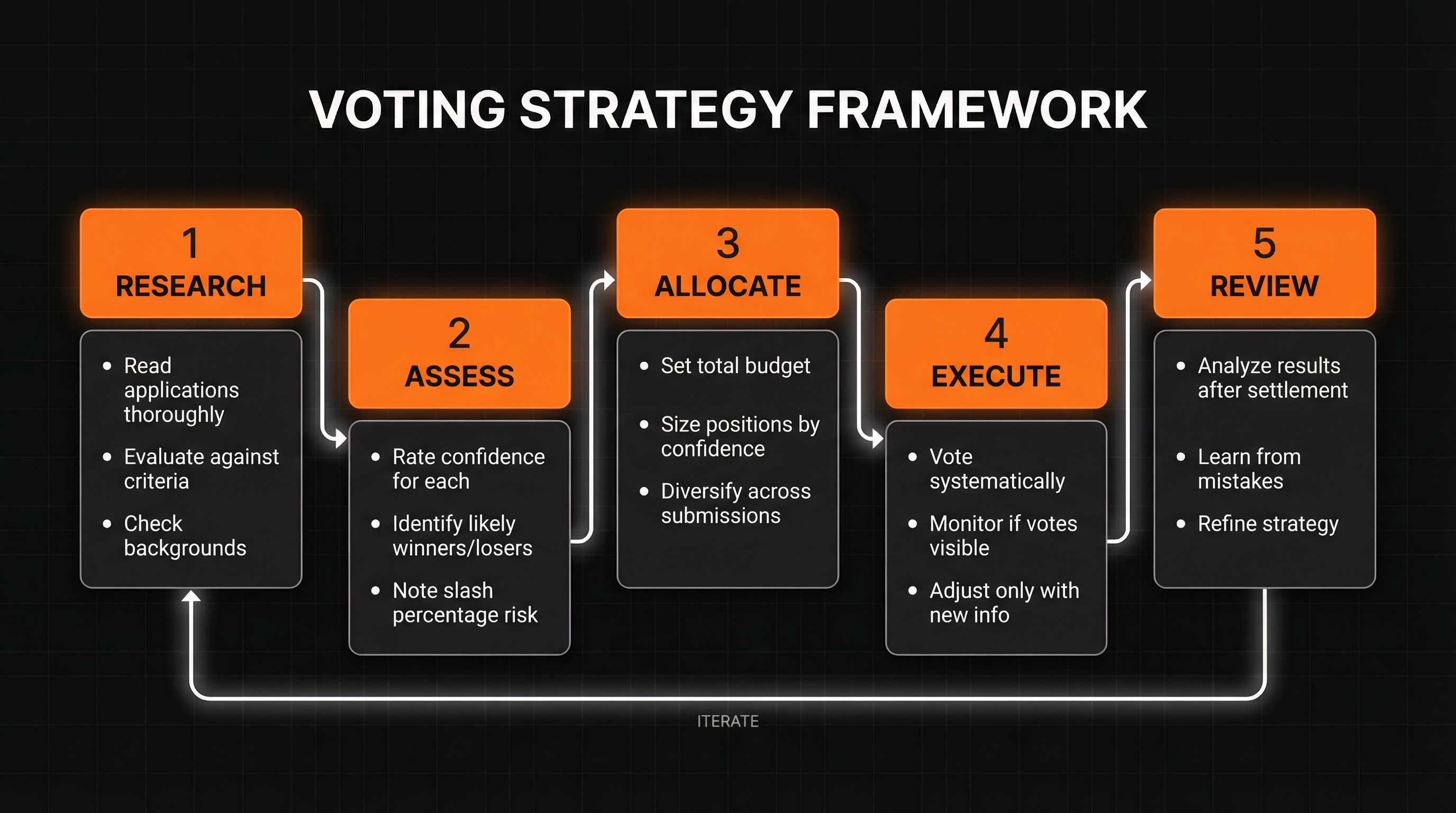
Before voting, actually read the application. Look for:
Clear problem and solution. Does it make sense? Is it specific?
Realistic budget. Is the ask justified? How does it compare to similar projects?
Credible contributor. Any track record? Do they seem capable of delivering?
Program fit. Does it match what the organizers are looking for?
Skip the ones that don't pass these basics. Focus your stake on submissions where you have genuine conviction.
Stake Sizing
Your stake should reflect how strongly you believe in your vote:
| Conviction | Stake |
|---|---|
| Very strong | Large |
| Strong | Medium |
| Moderate | Small |
| Uncertain | Skip |
If you're not sure, staking less (or nothing) is fine. The system doesn't need lukewarm votes.
Diversification
You can vote on multiple submissions. Spreading your stake across several votes you believe in reduces your risk if one doesn't go your way.
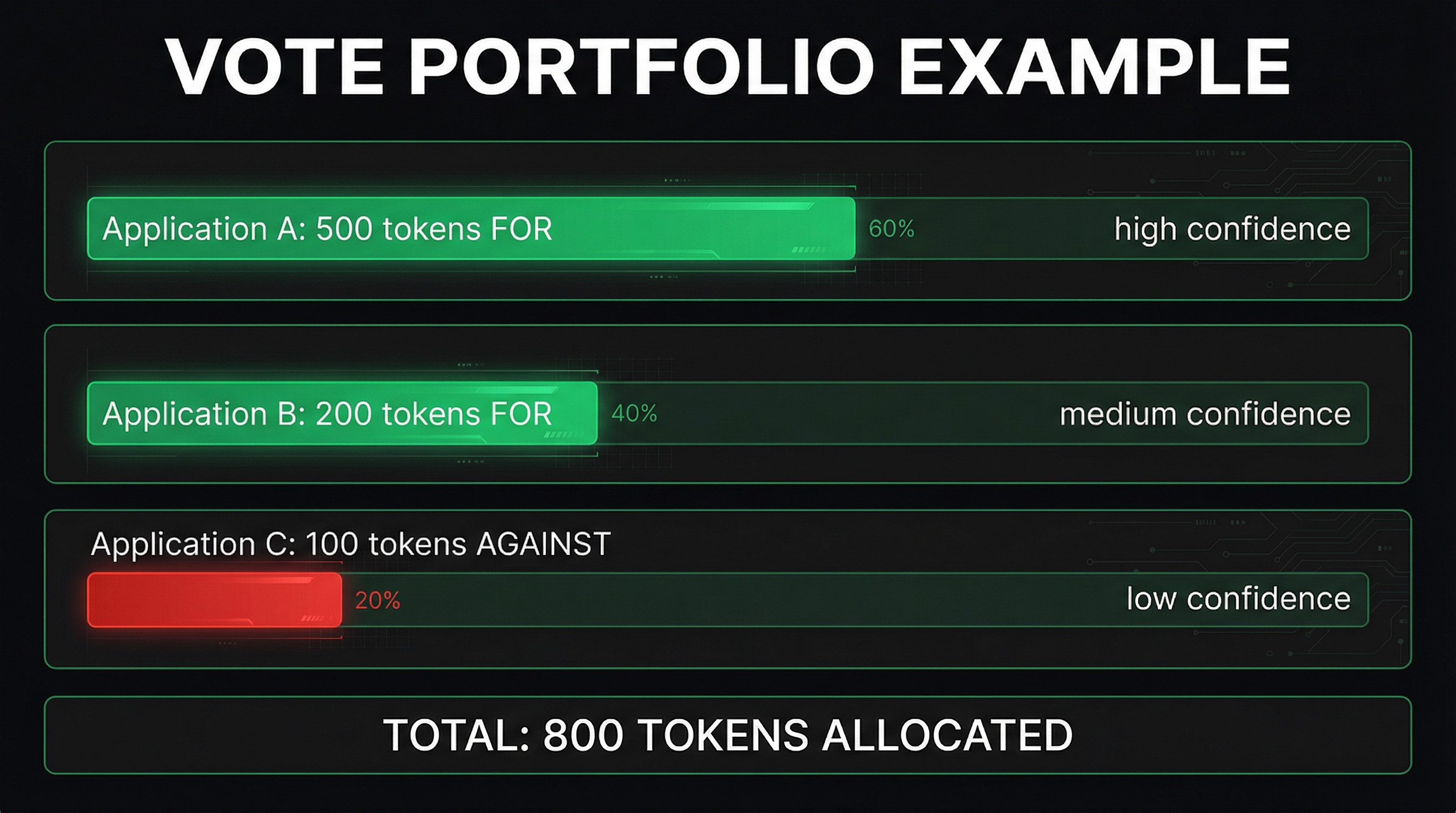
But don't diversify just for the sake of it. Only vote where you have actual conviction.
AGAINST Votes
Voting AGAINST is just as valid as FOR. If you genuinely believe a submission shouldn't win, say so with your stake. Good reasons to vote AGAINST:
- Low-quality work that doesn't meet the bar
- Overpriced proposals without justification
- Submissions that miss the program's goals
A correct AGAINST vote earns the same rewards as a correct FOR vote.
When Others Disagree
Sometimes you'll be confident in a vote that goes against the crowd. That's okay. If your conviction is based on real expertise or genuine belief, trust it.
The best outcomes come from voters who think independently. If you see something others are missing (an overhyped weak proposal, an underrated gem), your dissenting vote adds valuable signal.
Common Mistakes
Following the crowd. Bandwagoning defeats the purpose. Vote your conviction.
Over-concentrating. All stake on one submission means one loss hurts badly.
Ignoring the slash rate. High-slash programs require stronger conviction to justify the risk.
Skipping research. Voting without reading the application isn't conviction, it's gambling.
Learning
After each program, review your results. Where was your conviction correct? Where were you wrong? What did you miss? Good voters improve by understanding their blind spots.